C 5631
The Narrow Road to the Deep NorthC 5631 is the steam locomotive that hauled the first train along the completed Death Railway on 25 October 1943. Its journey marked the realization of a military project built through forced labour and mass death; its later display at Yasukuni Shrine in Tokyo makes the locomotive an emblem of how the railway is remembered—and of what its official commemoration leaves out.
The Railway and Its Purpose
The railway began as a line of surveyors’ pegs laid by Imperial Japanese Army engineers. The planned route extended 415 kilometres from north of Bangkok through to Burma. In 1943, the Japanese Empire needed a land route to supply its forces in Burma: the Allies were sending armaments to Chiang Kai-shek’s Nationalist army through Burma, while American control of the seas constrained Japanese transport. Japan lacked the money, machinery, and time to build the railway by ordinary means, but had access to hundreds of thousands of enslaved labourers, including Australian prisoners of war.
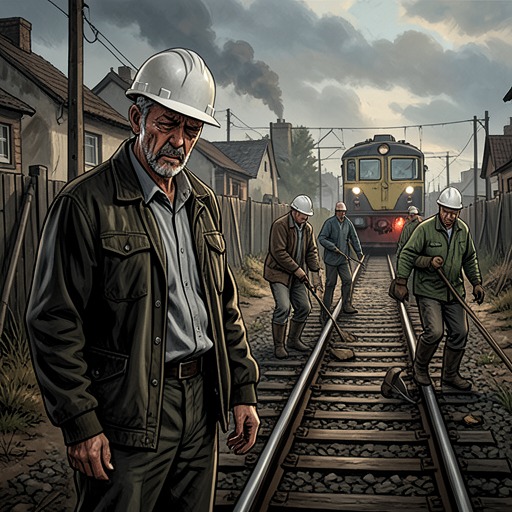
The line was more than a map or an engineering plan. At the work sites, its demands became physical tasks and quotas. When the Railway Command Group ordered Nakamura’s major cutting enlarged by a third to address gradient problems, the change required another 3,000 cubic metres of rock to be cut and removed. Prisoners worked by hand with hammers and chisels; the camp lacked adequate tools, and even the forge did not have enough coke to resharpen blunted chisels. C 5631’s eventual passage along the completed route thus marked the success of an infrastructure project whose technical ambition was inseparable from coercion and deprivation.
The First Train
On 25 October 1943, C 5631 travelled the length of the completed Death Railway, towing three carriages carrying Japanese and Siamese dignitaries. The train’s passage signalled that a line once confined to plans and exhortations had become operational. But the railway’s completion did not erase the labour behind it: the narrative places the train’s route above the remains of the dead, including those of one in three of the Australians sent to work on the railway.
The locomotive’s journey therefore carries two histories at once. It records a railway opened for military transport, but also passes over the consequences concealed by the appearance of a completed engineering work. The book sets the neat fact of the first train against the human cost buried beneath the track, refusing to let technological achievement stand alone as an account of what happened.
Display and Omission
C 5631 is later proudly displayed in the museum at Yasukuni Shrine in Tokyo. The shrine also contains the Book of Souls, which lists more than two million people who died in service to the Emperor of Japan in wars between 1867 and 1951. Enshrinement there is associated with absolution from evil; among the names are 1,068 men convicted of war crimes after the Second World War and executed, including men found guilty of mistreating prisoners of war on the Death Railway.
The plaque before C 5631 does not mention the railway’s horrors. Nor does it name the hundreds of thousands who died building the line. The Allied prisoners of war were about 60,000 of the labourers; alongside them were a quarter of a million or more Tamils, Chinese, Javanese, Malayans, Siamese, and Burmese. Estimates of deaths among these Asian labourers range from 50,000 to 200,000, and the total remains unknown. The contrast between the locomotive’s honoured display and the absent names turns the exhibit into a measure of selective memory: the machine is preserved, while the scale and identities of those who paid for its passage are left unrecorded.
The Locomotive and the Railway’s Afterlife
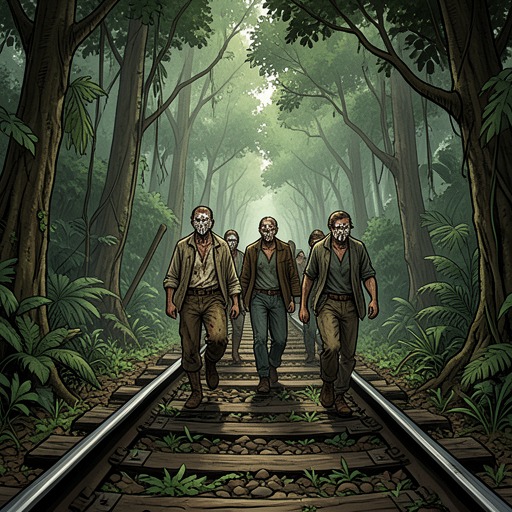
The railway itself did not endure as a functioning imperial achievement. After Japan’s defeat, its military purpose and support vanished. Japanese engineers and guards were imprisoned or repatriated, remaining enslaved labourers were freed, the Thais abandoned the line, the English dismantled it, and tribespeople pulled up and sold its rails. Rain and time then broke its banks and bridges, filled its cuttings, and returned vegetation to the ground where railway workers had died. Decades later, a few short sections were cleared as tourist, sacred, or national sites.
Against that material disappearance, C 5631 survives as a transportable monument to the railway. Its display preserves the image of completion, but the narrative places that image beside the railway’s dismantling and the jungle’s return. The line was broken, its imperial purpose lost, and its builders’ names largely forgotten; the locomotive’s continued prominence therefore sharpens the difference between remembering an object and remembering the people whose forced labour made its history possible.